Children’s Dental Care in South Guildford: When Should Kids First Visit a Dentist?

Your child’s first dental visit is an important step in maintaining healthy teeth and gums. Starting children’s dental care at an early age allows a dentist to monitor baby teeth, identify potential dental problems, and guide parents on brushing, diet, and oral hygiene. Regular children’s dental check-ups in South Guildford can also help children build positive dental habits from a young age.
If you are looking for children’s dental care in South Guildford or Perth, understanding when your child should first visit a dentist is an important step in protecting their oral health.
In this guide, we explain when children should first visit the dentist, what happens during their first appointment, common childhood dental problems, and how parents can support healthy teeth and gums at home.
Children should generally visit a dentist within six months of their first tooth appearing or by their first birthday, whichever comes first.
An early dental appointment gives the dentist an opportunity to check your child’s teeth and gums, monitor oral growth, and provide parents with practical advice about brushing, fluoride, diet, and other aspects of children’s dental care.
Early visits can also help children become familiar with the dental environment, making regular dental appointments a normal part of growing up.
Baby teeth are temporary, but they play an important role in a child’s growth. Healthy primary teeth help children:
Regular dental examinations can also help identify tooth decay, changes in tooth growth, and other concerns before they become more complicated.
For parents searching for a children’s dentist in South Guildford, choosing a dental practice that provides preventive care can help establish a consistent oral health routine from an early age.
Interesting Read: How Preventive Dental Treatment for Children Helps Avoid Cavities and Pain
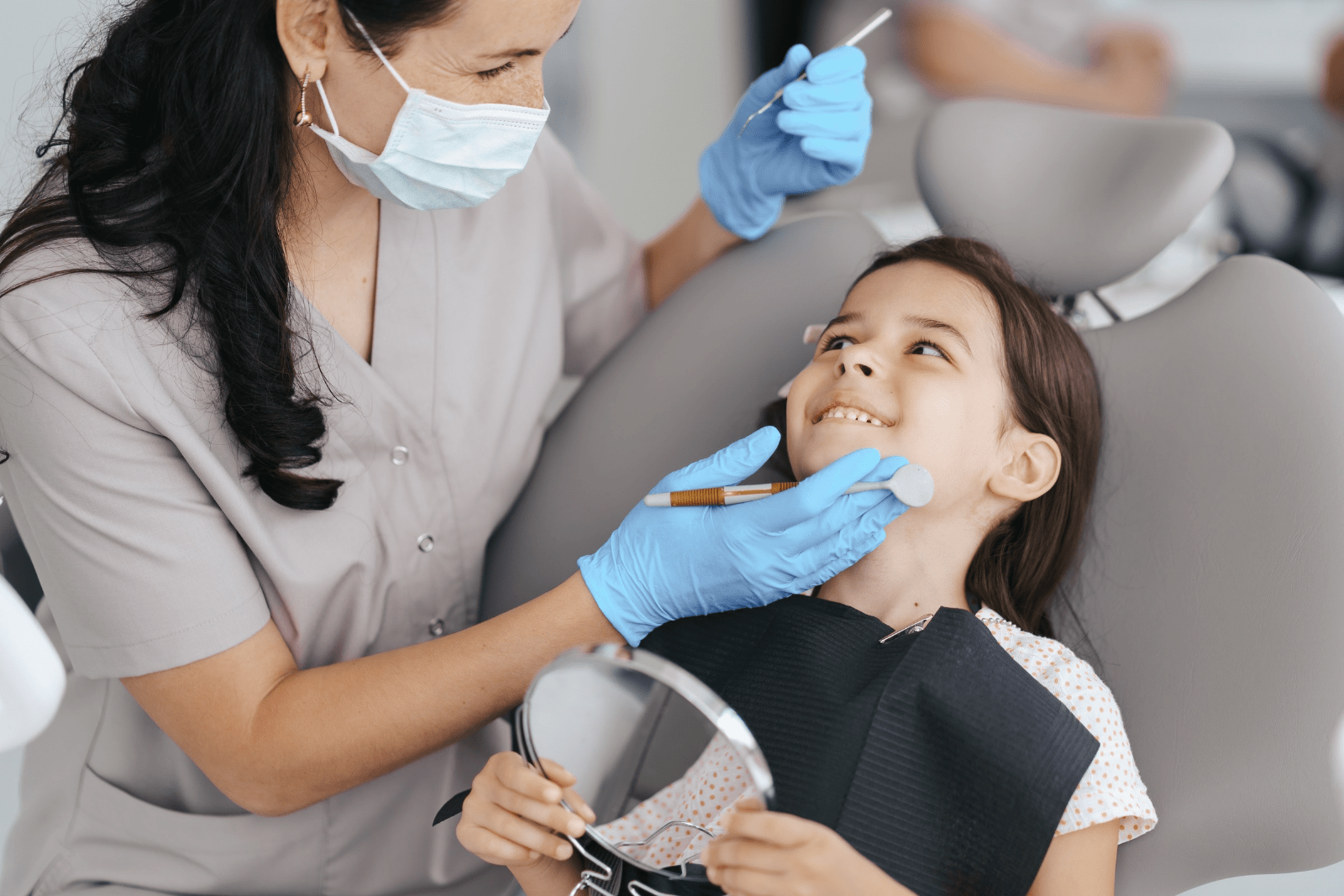
A first dental appointment is generally designed to be simple and comfortable. The dentist may examine your child’s teeth, gums, and mouth while assessing their overall oral growth.
Depending on your child’s age and needs, the appointment may include:
The dentist may also discuss habits such as thumb sucking or prolonged dummy use and explain whether they could affect developing teeth.
Children can experience common dental problems in children even when they are very young. Regular children’s dental check-ups can help identify concerns early and support healthy teeth and gums.
Tooth decay is one of the most common oral health concerns among children. Bacteria in the mouth can use sugars from food and drinks to produce acids that damage tooth enamel.
Frequent sugary snacks, sweetened drinks, and inadequate brushing can increase the risk of cavities. Parents can help reduce this risk by encouraging regular brushing and choosing water as the main drink between meals.
Thumb sucking and dummy use are common during early childhood. However, prolonged habits may influence the position of developing teeth or the way the jaws grow.
Your dentist can monitor your child’s growth and provide age-appropriate advice if the habit continues.
Baby teeth may sometimes be lost earlier than expected because of decay, injury or other dental problems. Losing a primary tooth too early can affect the space available for developing permanent teeth.
Regular dental examinations allow the dentist to monitor your child’s teeth and recommend appropriate care when necessary.
Parents have an important role in establishing good oral hygiene habits. Simple daily routines can help protect children’s teeth and gums.
Your dentist can recommend an appropriate check-up schedule based on your child’s individual oral health needs.
A positive first experience can help children feel more comfortable with future dental appointments.
Before the appointment, parents can:
Allowing the dentist to introduce the child to the dental environment at their own pace can also make the appointment more comfortable.
As children grow into teenagers, their dentist may begin monitoring the growth of their wisdom teeth. In some cases, wisdom teeth can cause discomfort, swelling, infection, or crowding.
If your teenager experiences symptoms associated with wisdom teeth, professional assessment can help determine whether wisdom teeth treatment is required. Depending on the position and condition of the teeth, a dentist can recommend appropriate treatment and explain the available options.
Children are active, and falls, sports injuries, and accidents can sometimes result in dental emergencies. Common problems include:
A dental injury should be assessed promptly, particularly when a permanent tooth has been damaged or knocked out. Accessing an emergency dentistry service can help your child receive timely assessment and appropriate treatment while reducing the risk of further complications.
Children who become familiar with regular dental visits from an early age can build a stronger understanding of the importance of oral health. Regular examinations with a dentist in Guildford, daily brushing, and healthy dietary habits all contribute to maintaining healthy teeth and gums.
Early children’s dental care is not only about treating cavities. It is also about prevention, monitoring oral health, and helping children establish habits that can support their teeth and gums as they grow.
Regular dental visits can help monitor your child’s teeth, identify potential concerns early, and build healthy oral hygiene habits from a young age. If your child is due for their first dental visit or routine check-up, our dental team can provide personalised guidance based on their oral health needs.
Book a children’s dental appointment with Guildford Dental Centre and take the next step towards maintaining your child’s healthy smile.
Call Guildford Dental Centre on 08 6104 0370 to schedule an appointment.
Parents should begin cleaning their child’s teeth as soon as the first tooth appears. Use an age-appropriate fluoride toothpaste and supervise brushing as your child grows the ability to brush independently.
The recommended frequency depends on your child’s individual oral health needs. Many children have routine dental examinations around every six months, but your dentist can recommend a schedule that is appropriate for your child.
Yes. Baby teeth help children chew and speak and maintain space for permanent teeth. Keeping primary teeth healthy is an important part of children’s dental care.
Seek professional dental advice as soon as possible. The appropriate response can depend on whether the knocked-out tooth is a baby tooth or permanent tooth, so prompt assessment is important.
Encourage twice-daily brushing with fluoride toothpaste, limit sugary foods and drinks, choose water regularly and maintain routine dental check-ups. Your dentist can also provide personalized advice based on your child’s oral health.